dedicated to perimeter safety and security




October 2026 Issue
Here’s what’s featured in our October issue:
- Trends: The Perimeter Changed. Did Your Security Strategy?
- Critical Infrastructure: Protecting America’s Caribbean Border
- The Multifamily Perimeter: Designing Security Around the Resident Journey
- Seeing in the Dark: Choosing the Right Night Vision Camera for the Mission
- Securing the Edge: The Operational and Technical Framework of Modern Acoustic Intelligence
- When Your Power Fails, What Happens to Perimeter Security?
- GSX Highlights: The Perimeter Knows No Bounds
- Rethinking Recruitment and Retention for the Event-Day Workforce
- 5 Questions for smartPeople – James Reno
- Is Your Smartphone Really Your Next Access Credential?
- ISC East 2026: 25 Perimeter Security Exhibitors to Put on Your Show Floor Route
- News From the Edge
- Product Showcase
Enjoy the read!

PRODUCT SPOTLIGHT: ALTRONIX RESERV24B
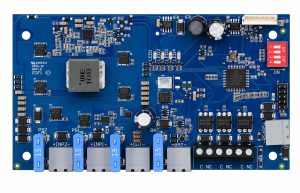 The Altronix ReServ24B is an automatic transfer switch with built-in rapid charging for SLA or LiFePO4 backup batteries. Supporting two 24VDC power supplies, it transfers from primary to secondary power without delay to help maintain continuous system operation. When primary power returns, ReServ24B restores the primary input and uses excess power to rapidly recharge backup batteries. Its LINQ™ Network Management Interface, via the LINQ2 module, enables remote monitoring, control and reporting, providing visibility into power status and system diagnostics for critical 24VDC security applications.
Trends by Mark McCourt
The Perimeter Changed. Did Your Security Strategy?
The Intelligent Perimeter provides a management framework for keeping perimeter security and safety aligned as organizational responsibility and risk change.
Over the past year, as we researched and developed The Intelligent Perimeter, one idea became increasingly clear: management needs a better way to recognize when the perimeter risk environment has changed—and determine what security should do about it.
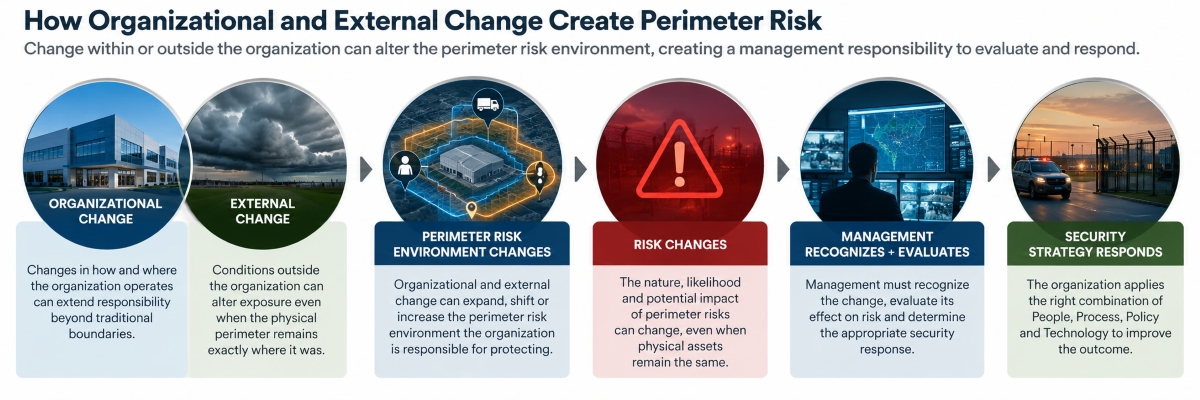
Organizations are constantly changing how and where they operate. Growth may extend operations into new locations, while changes in how people work, assets move or services are delivered can extend organizational responsibility beyond traditional physical boundaries. The security significance is easy to miss because these decisions are rarely made as security decisions. Yet as organizational responsibility changes, the perimeter risk environment can change with it.
Change also comes from outside the organization. Conditions surrounding a facility or operation can alter risk exposure even when the physical perimeter remains exactly where it was. The perimeter risk environment an organization is responsible for protecting is not fixed. Security strategy must remain aligned with it.
Recognizing Change Comes First
Security professionals are accustomed to monitoring threats. The Intelligent Perimeter adds another critical source of risk intelligence: change within the organization itself.
Consider a company that changes a logistics route. Valuable assets may now move through locations and conditions its existing security program was never designed to address. Or consider a facility that expands operating hours. The property line has not moved, but the risk at 2 a.m. can be quite different from the risk at 2 p.m.
These changes matter because organizational decisions can change security risk without being made as security decisions. Management must recognize what has changed, evaluate its effect on risk and determine the appropriate security response. That requires security to maintain awareness not only of the threat environment, but of changes within the organization itself.
Technology Is Enabling New Capabilities and Faster Operational Response
At the same time organizations are changing, the economics of perimeter protection are shifting as well.
Historically, perimeter security was easiest to justify around fixed facilities where the cost of infrastructure, technology and trained personnel could be supported. Extending comparable protection to remote locations, moving assets or other distributed responsibilities was often difficult and uneconomic.
Technology is changing that equation. Capabilities are becoming faster, more reliable and less expensive, while also requiring less specialized expertise to deploy and use effectively. Tasks that required specialized infrastructure or highly trained personnel can increasingly be performed across distributed environments with greater consistency and at a lower cost.
That changes what management can reasonably consider protecting. Risks that were once accepted because mitigation was impractical can increasingly be addressed proactively.
There are more perimeters to protect—and more practical ways to protect them.
As organizational responsibility changes, management can evaluate the resulting risk against a broader and more economical set of security capabilities. The question increasingly becomes not simply can we protect it, but where can proactive protection materially improve the outcome?
A Management Operating Model for Perimeter Security
This is the foundation of The Intelligent Perimeter. It is a management operating model for keeping security aligned with changing organizational responsibility and risk.
Management begins by recognizing where responsibility or external conditions have changed and evaluating the resulting risk. Security then needs to understand a developing situation early enough to positively influence the outcome. Trusted information and human judgment support an operational decision, which is translated into coordinated response and managed as the situation continues to change. Finally, the organization measures what happened and uses that evidence to improve. 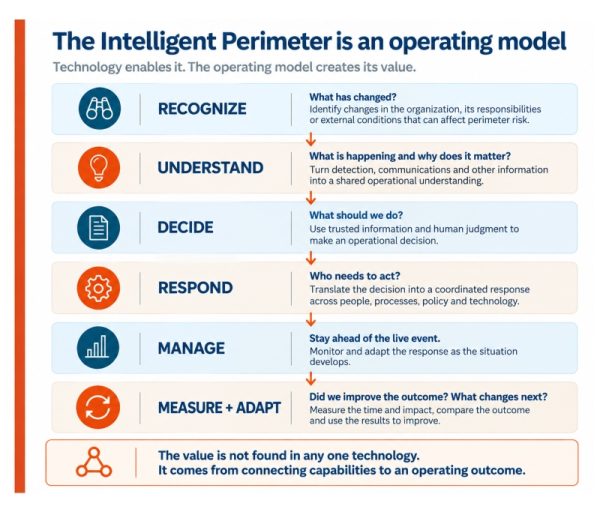
The framework builds on the security capabilities organizations already have. Their value comes not only from how well they perform individually, but from how they work together to improve the larger security outcome.
Physical Protection creates Control + Delay. Intelligent Detection produces Trusted Information. Communications enable Connected Information. Knitting Situational Awareness (KSA) establishes relationships among relevant observations and adds operating context, creating Shared Operational Understanding—a common understanding of what is happening and why it matters.
Technology and automation can accelerate that process by connecting individual observations, helping determine whether they represent a credible threat and supporting faster action. Technology moves the human up the decision chain, allowing the responsible person to focus on judgment, authority and accountability rather than assembling information.
Once a decision is made, the focus shifts to managing the response. A live perimeter event continues to develop, which means the response must evolve with it. Security must adapt as the event develops and, when the event is over, determine whether the response actually improved the outcome.
That completes the management loop: measure the time, measure the impact and compare the outcome.
Why Management Comes First
Before KSA, AI, automation, or integration can improve an outcome, management must first recognize when changes in the organization, its responsibilities, or its operating environment have changed the risk security is expected to manage.
From there comes the question at the heart of The Intelligent Perimeter: How should our security strategy respond?
The answer starts with the outcome the organization needs and aligns People, Process, Policy and Technology around achieving it.



From Framework to Practice: The Intelligent Perimeter Webinar Series

The Intelligent Perimeter Webinar Series takes the ideas explored in this article and puts them into practice. Each session will feature a focused 20-minute presentation followed by an open discussion where security professionals can explore how the framework applies to real-world perimeter challenges.
The three-part series will examine the complete management journey:
Part 1 — The Perimeter Changed. Did Your Security Strategy?
How changes inside and outside an organization can create new perimeter risks—and how management can recognize when security strategy needs to change.
Part 2 — From Perimeter Risk to Earlier Understanding
How detection, communications, situational awareness and other security capabilities can help organizations understand developing threats sooner and make better-informed decisions.
Part 3 — From Decision to Measurable Outcome
How organizations can turn understanding into coordinated response, adapt as an event develops and determine whether security actually improved the outcome.
Each webinar builds on the last, moving from recognizing change to understanding risk, making decisions, coordinating response and measuring results.
Join the Discussion
Register for Part 1, The Perimeter Changed. Did Your Security Strategy?, on November 10.

Critical Infrastructure

Protecting America’s Caribbean Border: Building a Perimeter That Moves With the Threat
Inside a real-world operation that shows how the Homeland Security Task Force detects, tracks and stops threats before they reach shore.
A Coast Guard HC-144 Ocean Sentry aircraft patrolling international waters north of Puerto Rico detected something suspicious: a 25-foot panga-style go-fast boat.
That detection on January 14, 2026, set a coordinated response in motion.
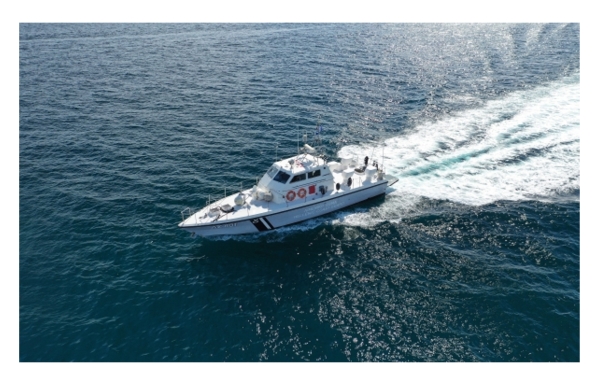
Watchstanders at Coast Guard Sector San Juan received the information and diverted two maritime assets—the Coast Guard Cutter Joseph Tezanos and a 45-foot Response Boat-Medium from Station San Juan. U.S. Customs and Border Protection (CBP) Air and Marine Operations responded with a multi-role enforcement aircraft and maintained surveillance from above.
Supported by the cutter and CBP aircraft, the Coast Guard response boat reached the suspect vessel and its crew took control. Three suspected smugglers were apprehended. Sixteen bales recovered from the vessel tested positive for cocaine.
The haul weighed more than 1,115 pounds and had an estimated wholesale value exceeding $7 million.
The suspects, vessel, and narcotics were transferred to Homeland Security Task Force–San Juan Region law-enforcement partners for investigation and prosecution.
Patrol. Detect. Confirm. Track. Coordinate. Intercept.
There was no border wall or checkpoint. The initial detection occurred from an aircraft over international waters. The suspected threat was identified, tracked and stopped before reaching Puerto Rico.
It is a real-world example of what border security can look like when the perimeter extends far beyond the border itself.
The Border Extends Beyond the Shoreline
Puerto Rico and the U.S. Virgin Islands are not simply stepping stones toward the U.S. border. They are part of it.
Protecting the Caribbean border presents a fundamentally different challenge than protecting a fixed land boundary. Vessels carrying narcotics or people attempting to enter the United States illegally can approach hundreds of miles of coastline from different directions.
The physical coastline is fixed.
The security perimeter protecting it is dynamic.
Aircraft can patrol far beyond U.S. territorial waters, while radar and electro-optical/infrared sensors search maritime approaches. As potential threats move, command centers can maintain situational awareness and redirect cutters, aircraft and high-speed boats toward targets before they reach shore.
But technology alone does not create that perimeter.
The January interdiction required the capabilities and authorities of multiple organizations working together.
“This successful narcotics interdiction highlights the efficient interoperability and strength within the Coast Guard, Customs and Border Protection Caribbean Air and Marine Branch and our Homeland Security Task Force partner agencies,” said Cmdr. Matthew Romano, Coast Guard Sector San Juan chief of response.
Many Agencies, One Response
Behind the January operation is the Homeland Security Task Force–San Juan Region, which brings federal, territorial and local agencies together around shared security threats.
Participants include the Coast Guard; CBP Air and Marine Operations, Office of Field Operations and Border Patrol; Homeland Security Investigations; DEA; FBI; ATF; the U.S. Marshals Service and other federal agencies. Puerto Rico and U.S. Virgin Islands law-enforcement organizations contribute local personnel, knowledge and authorities, while federal prosecutors extend the process from enforcement into prosecution.
The significance isn’t the size of the organization. It is the ability to assemble different capabilities around the same threat.
One organization may detect a threat while another maintains surveillance or has the nearest vessel capable of interception. If suspects reach shore, Border Patrol may become involved. Homeland Security Investigations (HSI) may then take over the criminal investigation, with prosecutors continuing the case after the operational response ends.
The result is not one agency protecting the perimeter.
It is one response assembled from many specialized capabilities.
 When the Threat Moves, the Response Moves
A February 2026 operation demonstrates why that matters.
During a routine patrol, another Coast Guard HC-144 crew spotted a panga-style go-fast vessel approximately 100 nautical miles north of Camuy, Puerto Rico. Multiple bales and fuel containers were visible aboard.
Sector San Juan diverted the Cutter Joseph Napier and coordinated with CBP’s Caribbean Air and Marine Branch, Border Patrol’s Ramey Sector and Homeland Security Investigations.
This time, however, the suspects didn’t wait to be intercepted.
As the cutter approached, the suspected smugglers maneuvered evasively, dumped their cargo overboard and fled toward Puerto Rico.
The Coast Guard recovered 29 bales containing 2,083 pounds of cocaine, valued at approximately $13.3 million. The suspects reached shore and abandoned their vessel near Arecibo. Border Patrol agents later located the boat, and HSI assumed the lead on the investigation.
The nature of the response had changed in the middle of the operation.
What began as airborne detection became maritime surveillance, then pursuit, contraband recovery, a land search and finally a criminal investigation.
The threat crossed operational boundaries.
The response crossed them with it.
Different Assets, Same Operating Model
A third operation shows the same model at work with a different combination of technology and personnel.
At approximately 10:52 p.m. on April 28, 2026, a CBP Air and Marine Operations Multi-Role Enforcement Aircraft detected a 30-foot vessel about 35 nautical miles southeast of Puerto Rico. The aircraft observed multiple fuel containers and suspected contraband.
A CBP UH-60 Black Hawk maintained surveillance while Coastal Interceptor Vessels from Ponce and Fajardo moved toward the target.
At approximately 12:58 a.m.—just over two hours after the initial detection—marine interdiction agents stopped the vessel.
Agents found 1,418 pounds of cocaine concealed inside 20 black fuel containers. Three suspects were taken into custody.
The equipment and responding units were different from those involved in the January operation.
The operating principle remained the same:
Detect early. Maintain awareness. Share information. Move the appropriate assets into position. Intercept before the target reaches shore.
Preparing Before the Alarm
That level of interoperability cannot be created after a suspicious vessel appears.
The relationships, responsibilities, communications and procedures that make a coordinated response possible must already be in place. Joint operations provide one way to build that readiness.
In May 2025, Coast Guard Sector San Juan led a Multi-Agency Strike Force Operation (MASFO) at a cargo-container terminal in the Bay of San Juan. Participants included CBP Office of Field Operations, HSI, ATF, DEA, the U.S. Marshals Service, the U.S. Attorney’s Office, Puerto Rico National Guard and Coast Guard units.
Together they inspected approximately 105 containers and 40 vehicles and conducted 30 Transportation Worker Identification Credential (TWIC) verifications. No security violations were identified, although three containers were temporarily detained because of damage and improper cargo securing.
Capt. Luis J. Rodríguez, commander of Coast Guard Sector San Juan and Captain of the Port, described the value of that approach: “Through these efforts and established partnerships, we enhance our collective inspection capabilities and maximize agency specific resources and expertise.”
That preparation is an important part of the security model.
Agencies aren’t waiting for an incident to determine how they will work together. Joint operations put people, processes, authorities and communications into practice before a real threat demands them.
Technology Makes the Dynamic Perimeter Possible
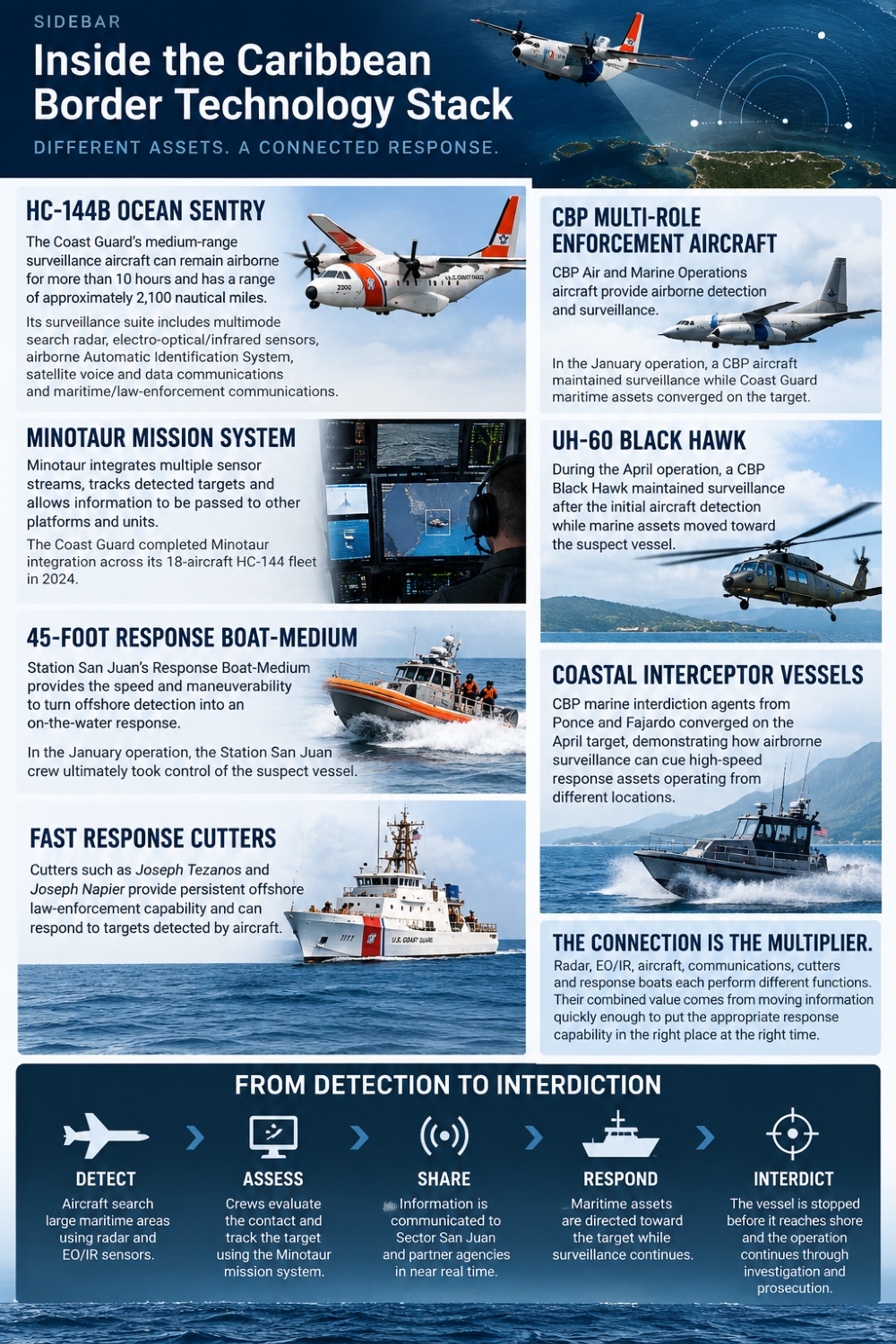
The HC-144 Ocean Sentry aircraft involved in the January and February operations demonstrate how technology can extend the security perimeter far beyond the coastline.
The Coast Guard’s HC-144B has an endurance of more than 10 hours and a range of approximately 2,100 nautical miles. Its surveillance capabilities include multimode search radar, electro-optical/infrared sensors, airborne Automatic Identification System and secure and nonsecure satellite voice and data communications.
The aircraft also carries the Minotaur mission system, which integrates information from multiple sensors, tracks detected targets and allows information to be transferred to other platforms and units. The Coast Guard completed Minotaur integration across its 18-aircraft HC-144 fleet in 2024.
The significance isn’t simply better radar or higher-resolution imagery.
It is what happens to the information.
An aircraft searches a large maritime area. Sensors locate something that warrants attention. Crews assess what they are seeing. Information is communicated to command personnel and other responding units. Surveillance can continue while the appropriate surface assets move toward the target.
Technology allows that process to begin far beyond the physical border.
Click Image to Expand
A Dynamic Security Perimeter
The January operation started with an aircraft patrolling beyond Puerto Rico’s coastline.
Its crew detected and assessed a suspicious vessel, then relayed the information to Sector San Juan and other agencies. A second aircraft maintained surveillance while maritime assets moved toward the target, leading to an interception before the vessel reached shore. Other law-enforcement organizations then carried the operation forward through investigation and prosecution.
Patrol. Detect. Confirm. Track. Coordinate. Intercept.
The United States did not wait for the suspected threat to arrive at its geographic border before responding to it.
By extending the security perimeter outward, agencies gained time and distance to identify the threat, assess the situation and bring the appropriate resources into position.
That is the central lesson from America’s Caribbean border.
A border is a geographic boundary. Protecting it requires a security perimeter that can move with the threat.

SECTOR: Multifamily Housing

The Multifamily Perimeter: Designing Security Around the Resident Journey
How multifamily properties can combine environmental design, access control and automation to create safer, more convenient resident experiences.
A resident returning to a downtown high-rise crosses the property’s primary security perimeter when she enters the controlled lobby. Across town, another resident drives through a gated community entrance before reaching an access-controlled garage. At a garden-style apartment complex, a third resident may turn from a public road into an open parking lot, pass several buildings and climb an exterior stairway before encountering the first hard access-control point: his own front door.
All three live in multifamily housing. All three expect to feel safe at home. But their perimeters—and the way those perimeters need to be managed—are fundamentally different.
Those differences are becoming more important as owners and developers look for ways to improve the resident experience without continually adding staff to operate the property.
Technology is changing what is possible. A resident can move through a property without stopping at a desk, hand a visitor temporary access without sharing a permanent code, and have a routine request handled without waiting for someone in the leasing office. At the same time, management can gain greater visibility into who is entering the property and what is happening around it.
The opportunity is not simply to replace people with technology. It is to automate routine interactions and make them happen faster, while making human support easier to reach when it is actually needed.
The starting point, however, is not the technology.
It is the perimeter.
Three Properties, Three Perimeters: Multifamily Security in Practice
The traditional security perimeter is relatively easy to visualize around a factory, utility or warehouse. Multifamily housing is different because the transition from public to protected space varies dramatically by property type.
At a high-rise, a controlled lobby entrance can establish a strong boundary. Once inside, residents move through increasingly private spaces as they travel from the lobby to the elevator, their floor and ultimately their apartment.
A gated development moves that first boundary outward. The resident enters a controlled perimeter before reaching a garage, building or home. Visitors and service providers also encounter that boundary before getting close to the residence.
Garden-style apartments present a more complex perimeter security challenge. The property entrance may be completely open. Residents, visitors and delivery drivers can enter the parking lot, and pedestrians may be able to move freely among buildings. A resident’s journey may extend from the property entrance to a parking space, sidewalk, exterior stairway, patio or deck and finally the apartment door.
There may be no single hard perimeter to secure.
That does not mean there is no perimeter. It means security must be layered progressively across the property as the resident moves from public space toward home.
Start With the Environment: CPTED for Multifamily Security
Crime Prevention Through Environmental Design (CPTED) provides a framework for reducing security risks through the design and management of the physical environment.
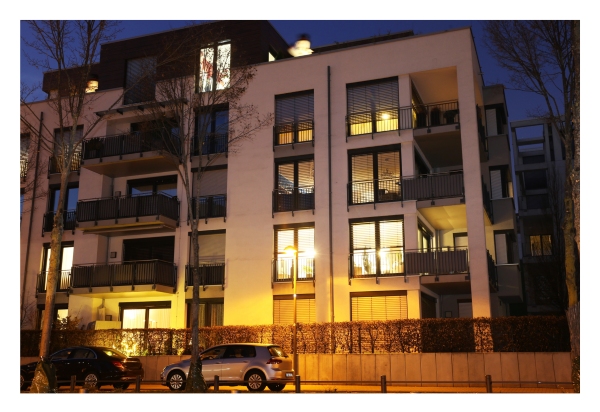
Consider the resident who arrives at a garden apartment after dark. Before reaching a controlled door, that person may cross a parking lot, follow a sidewalk, pass landscaping and climb an exterior stairway.
The design of those spaces influences what the resident can see, what other people can see and how easily someone can move through the property without being noticed.
 Lighting becomes especially important.
The objective is not simply to make the property brighter. A well-designed environment allows residents to see who is approaching, reduces places where someone can remain concealed and provides usable visibility along the routes residents and visitors actually use.
It also needs to remain effective as the property changes over time. Trees and shrubs grow. Fixtures fail. Parking patterns change. A walkway that was visible when the property opened may become partially concealed years later.
Video introduces another consideration. A space that appears adequately illuminated to a resident may not necessarily provide enough visibility for a camera to capture a recognizable image of someone moving through it. Conversely, an extremely bright fixture can create glare and deep shadows that make both human observation and video more difficult.
The physical environment and the security system therefore need to be designed—and periodically reassessed—as one environment.
Florida provides a real-world example of CPTED principles moving beyond design guidance and into multifamily risk management. Under Florida law, qualifying multifamily property owners can receive a presumption against liability for certain third-party criminal acts when specified security measures are substantially implemented. The law includes requirements addressing entry and exit video, parking and common-area illumination, locks and other physical measures, along with a current CPTED assessment and employee crime-deterrence and safety training.
The significance is not that every property should copy Florida’s requirements. It is that the physical environment itself is increasingly being treated as part of multifamily security risk management.
That creates an important opportunity for existing multifamily properties. Improving the perimeter does not necessarily require rebuilding it. An assessment may reveal that changing a pedestrian route, restoring a sightline, improving illumination or removing a concealment area can address a security vulnerability more effectively than adding another device.
Control the Transition: Smarter Multifamily Access
As residents move from public spaces toward their homes, the nature of the perimeter changes.
The open entrance to a garden property may provide little opportunity to control who enters. The lobby of a high-rise can provide substantial control. A gated development can establish that control even earlier.
The objective is to apply access control where it adds security without creating unnecessary friction for residents.
The Artisan Apartment Homes in Dunedin, Florida, provides an example. The mixed-use property has 92 controlled openings across residences and shared spaces. Management migrated to a centralized access control system that manages resident access across authorized areas of the property, with support for mobile credentials.
The operational value lies not simply in the credential, but in how precisely access can be managed.
Management can determine who should enter a particular space and when that permission should begin and end. A housekeeper or service provider does not necessarily need the same access as a resident. Someone moving out does not need to return every physical copy of a credential before authorization can end.
The same principle applies at the outer perimeter. A visitor can be admitted without receiving a permanent gate code. A delivery can be handled without giving unrestricted access to the property. A resident can enter without waiting for an attendant.
Each interaction becomes more controlled while requiring less routine intervention from property staff.
That is where automation begins to change both security and property operations.
Remove the Wait: Automating Routine Multifamily Needs

Apartment properties generate countless routine interactions that traditionally require someone’s attention.
The important question is not how many of those interactions can be automated. It is how many can be resolved immediately without sacrificing control.
A new resident should not necessarily need to visit an office simply to receive permission to enter a building. Someone who has moved out should not retain access until a physical credential is returned or deactivated manually. A maintenance technician should not need unrestricted access simply because carrying a master key is administratively easier.
When those permissions are connected to the property’s operating systems, they can change automatically with a resident’s status.
Move in, and the appropriate access begins. Move out, and it ends. Schedule authorized work, and the person performing it receives the access needed for that job and time period.
The same idea extends beyond security.
Merion Residential, for example, implemented mobile workflow and communications technology around maintenance and resident service. The company reports reducing service-request completion from two to three days to 12 hours or less while eliminating its average weekly backlog of 92 open requests.
The important result for the resident is not the software. It is that something that used to take days can be addressed in hours, with less uncertainty about whether anyone received the request.
That is the broader promise of multifamily automation: reduce the distance between a resident’s need and its resolution.
Connect the Resident to Security and Property Services
Once the resident and property are connected, the perimeter can become more than a place where access is granted or denied. It can become the beginning of how the resident interacts with the property and its services.
The resident entering the property is already establishing identity: I live here and I am authorized to enter. That same relationship can continue as the resident reaches the building, uses shared spaces, admits a guest or needs something from property management.
This changes the role of the traditional leasing office or front desk. Routine transactions do not always have to wait for a person to receive a call, look up information and perform an administrative task.
But that does not make people less important.
It makes the distinction between routine service and human response much more important.
Consider a resident returning to a garden apartment at 10:30 p.m. who believes someone is following her from the parking area.
A camera that records what happens may provide useful evidence tomorrow. She needs help tonight.
Can she quickly ask for assistance? Can whoever receives that request determine her location, understand what is happening and communicate with her? And can the appropriate person—property security, a monitoring center, management or emergency services—be brought into the situation quickly?
Those questions take the concept well beyond the smart apartment.
The value of automation is not that it eliminates human involvement. For routine needs, it can eliminate the wait for human involvement. When safety is at stake, it should do the opposite: shorten the path to the right person.
Design Security Around the Multifamily Perimeter
There will never be one multifamily security architecture because there is no single multifamily perimeter.
The high-rise can establish a strong boundary at the lobby. A gated development can move that boundary to the property entrance. A garden-style property may need to create protection progressively as the resident moves across large open space toward the apartment.
Those differences should determine how the property is designed and where control, awareness and response are needed.
They also explain why the next generation of multifamily security may be less about adding individual security products and more about making the property itself work intelligently.
Begin with the environment so people can move through it safely.
Establish control where the transition from public to private makes control valuable.
Automate routine interactions so residents receive what they need without unnecessary delay.
And connect residents to services—and to people—when they need help.
The technologies behind those functions will continue to change. The resident’s expectation is much simpler: from the moment they cross the property’s first perimeter until they close the door to their home, they should feel secure, connected and confident that the property is working for them.
Establish control where the transition from public to private makes control valuable.
Automate routine interactions so residents receive what they need without unnecessary delay.
And connect residents to services—and to people—when they need help.

Seeing in the Dark: Choosing the Right Night Vision Camera for the Mission
Buying a “night vision camera” sounds straightforward.
It isn’t.
A camera protecting a remote utility perimeter may need to detect a person hundreds of yards away in complete darkness. A camera covering a parking lot may need to determine the color of a vehicle or someone’s clothing. A camera watching a controlled gate may need clear facial and vehicle imagery without visible lighting. A camera protecting a large industrial site may need to find a target and then follow it.
Those are different security outcomes—and they can require different imaging technologies.
Low-light cameras use available visible light to produce useful images, increasingly in color, while active infrared cameras supply their own invisible IR illumination. Thermal cameras take a different approach, detecting heat rather than visible light, and multispectral systems combine thermal detection with visible imagery. For applications requiring operators to acquire and follow a target, PTZ systems add another layer of capability.
So the first question when specifying nighttime video shouldn’t be:
Which camera sees best in the dark? It should be: What do we need to accomplish after dark?
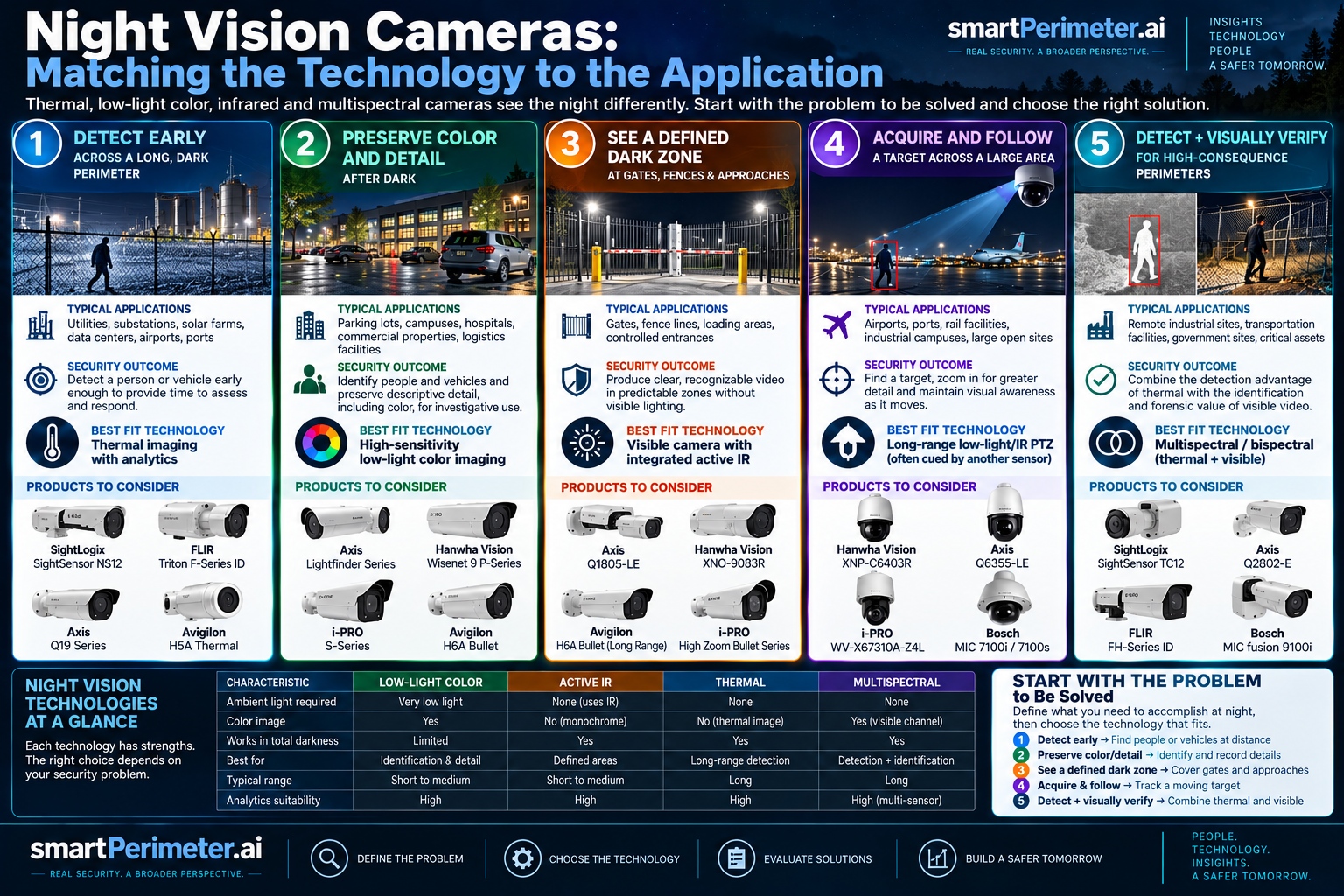
Here are five common perimeter applications and the technologies—and current cameras—that best fit the mission.
1. Goal: Detect an Intruder Across a Long, Dark Perimeter
Application: Utilities, substations, solar farms, data centers, airports, ports and other large critical-infrastructure sites.
Security outcome: Detect a person or vehicle early enough to provide time to assess and respond.
Best fit: Thermal imaging with analytics.
At a remote substation, knowing that someone wearing a red shirt is approaching may be far less important than knowing a person is moving through a restricted area 300 yards away.
That makes thermal imaging a natural fit. Thermal cameras detect differences in heat rather than relying on visible illumination, making them particularly effective for persistent detection across dark outdoor environments. Analytics can then distinguish people and vehicles from wildlife, vegetation and other movement that otherwise generates nuisance alarms.
But the specification still matters. Lens selection, field of view, thermal resolution and required detection distance determine how much perimeter a camera can reliably protect.
Products to Consider…
SightLogix SightSensor NS12
One of the more interesting new perimeter products for 2026 comes from perimeter specialist SightLogix. Introduced in September, the NS12 uses a 1280×1024 thermal imager and AI classification. SightLogix says its two versions provide inbound human detection to 200 or 310 meters while covering substantially more area than conventional 640×480 thermal systems. It is specifically designed for large outdoor perimeters.
FLIR Triton F-Series ID
A purpose-built thermal perimeter camera combining 640×480 thermal imaging with onboard analytics that classify human and vehicle intrusions. Different lens options allow designers to match field of view and detection distance to the site.
Axis Q19 Series
Axis’s thermal family provides detection in complete darkness, with models and lens options suited to different perimeter distances and fields of view.
Avigilon H5A Thermal
Combines thermal detection with Avigilon analytics for applications where recognizing the presence and movement of people and vehicles matters more than producing conventional visible imagery.
SPECIFICATION TAKEAWAY: For long, dark perimeters, start with the required detection distance and coverage area. Resolution by itself doesn’t tell you whether a thermal camera will reliably detect the target where you need it.
2. Goal: Preserve Color and Descriptive Detail After Dark
Application: Parking lots, campuses, hospitals, commercial properties, logistics facilities and building exteriors.
Security outcome: Capture descriptive details such as clothing and vehicle color, not simply detect that someone is present.
Best fit: High-sensitivity low-light color imaging.
A thermal image may provide excellent detection, but it cannot tell an investigator that the vehicle was blue or that the person leaving the scene wore a red jacket.
Where some ambient illumination exists—from parking-lot lighting, buildings, streetlights or other sources—modern low-light cameras can retain useful color at illumination levels that once would have forced cameras into monochrome mode.
That can make the video more valuable both during an incident and afterward.
Products to Consider…
Axis Lightfinder-equipped Cameras
Lightfinder is Axis’s low-light imaging technology, available across multiple current camera families. It is designed to retain color and image detail in very low illumination. The correct model can therefore be selected around resolution, lens, form factor and scene requirements.
i-PRO S-Series / Color Night Vision Models
i-PRO offers cameras specifically engineered around low-light color performance together with AI processing. Its current outdoor S-Series includes models capable of operating at very low visible-light levels while retaining AI-based object detection.
Hanwha Vision Wisenet 9 P-Series AI Cameras
Hanwha’s latest imaging platform combines large image sensors, AI-based noise reduction and low-light processing. The PNO-A9082R bullet, for example, uses a 1/1.2-inch sensor and AI image processing intended to preserve detail under difficult nighttime conditions.
Avigilon H6A Bullet
Available at resolutions up to 8 MP, the H6A combines low-light imaging, AI-powered video analytics and integrated IR. As ambient light fades, integrated IR gives the H6A another imaging option rather than relying on low-light performance alone.
SPECIFICATION TAKEAWAY: Don’t rely solely on the lowest lux number on a datasheet. Ask what happens to moving subjects, color accuracy, noise and usable forensic detail at the illumination actually present at the site.
3. Goal: See a Defined Approach in Total Darkness
Application: Gates, fence corridors, loading areas, building approaches and controlled vehicle entrances.
Security outcome: Produce clear, recognizable video where the area of interest and required viewing distance are known.
Best fit: Visible camera with integrated active infrared illumination.
There are applications where thermal may be unnecessary and ambient light cannot be counted on. A defined gate lane is a good example.
Here, the camera knows where to look and the distance is predictable. What security needs is clear, recognizable imagery—even in total darkness. Integrated IR provides it without flooding the area with visible light.
Modern systems can also vary IR intensity with zoom or target distance, helping prevent a nearby person, vehicle or reflective surface from becoming overexposed.
Products to Consider…
AQ1805-LE
Combines 1080p imaging, 32x optical zoom, Lightfinder 2.0 and Optimized IR. Its integrated IR reaches as far as 100 meters, making it well suited to covering a defined approach from some distance.
Hanwha Vision XNO-9083R
The long-bullet configuration demonstrates the growing reach of integrated IR. Depending on configuration, Avigilon specifies IR illumination reaching as far as 170 meters, combined with analytics and long-range optics. Depending on configuration, Avigilon specifies IR illumination reaching as far as 170 meters, combined with analytics and long-range optics.
Avigilon H6A Bullet
The long-bullet configuration demonstrates the growing reach of integrated IR. Depending on configuration, Avigilon specifies IR illumination reaching as far as 170 meters, combined with analytics and long-range optics. Depending on configuration, Avigilon specifies IR illumination reaching as far as 170 meters, combined with analytics and long-range optics.
i-PRO High Zoom Bullet Series
For applications requiring significantly more reach, i-PRO’s current high-zoom bullets combine 10x or 30x optical zoom, edge AI and models offering IR illumination as far as 250 meters.
SPECIFICATION TAKEAWAY: Match IR distance to the actual scene. More illumination isn’t automatically better. Reflective license plates, signs, nearby objects and narrow corridors can all affect nighttime image quality.
4. Goal: Find and Follow a Target Across a Large Area
Application: Airports, ports, rail facilities, logistics yards, industrial campuses and other large open sites.
Security outcome: After detecting activity, acquire the target, obtain greater detail and maintain visual awareness as it moves.
Best fit: Long-range low-light/IR PTZ, often cued by another detection technology.
A fixed camera protects its field of view. A PTZ can investigate. Radar, a thermal camera, fixed video analytics or a fence sensor can provide the initial alarm. The PTZ can then turn toward the target, zoom in and potentially track it as it moves.
At night, tracking is only as good as the PTZ’s ability to maintain a clear view of the target.
Products to Consider…
SightLogix SightSensor TC12
Introduced in September 2026, the TC12 combines a 1280×1024 thermal sensor with a 4K visible imager. Particularly interesting is its Dual AI approach: independent thermal and visible analytics cross-check detections before sending an alarm. SightLogix specifies inbound detection to 200 meters with a wide 62-degree thermal field of view.
Axis Q2802-E Bispectral Camera
Introduced in 2026, the Q2802-E combines a 640×480 thermal sensor with a 4K visible camera. It can detect using the thermal stream, verify with visible imagery and fuse thermal and visible information into a combined image.
FLIR FH-Series ID
Combines a 640×512 thermal imager with 4K visible video and DNN analytics. The system can schedule analytics to use visible imagery during the day and thermal imagery at night, giving the same perimeter different sensing modes as conditions change.
Bosch MIC Fusion 9100i
A rugged PTZ approach to multispectral surveillance, combining visible imaging, thermal sensing, long-range PTZ capability and AI-based perimeter analytics. That combination allows operators to move from detection to active investigation using the same PTZ.
SPECIFICATION TAKEAWAY: A PTZ shouldn’t necessarily be asked to discover every threat itself. It can be more effective as the assessment and tracking component of a system in which another sensor tells it where to look.
5. Goal: Detect the Threat—and Then Determine What It Is
Application: High-consequence critical infrastructure, remote industrial sites, transportation facilities and other locations where early detection and visual verification are both important.
Security outcome: Combine the detection advantages of thermal imaging with the identification and forensic information available from visible video.
Best fit: Multispectral or bispectral imaging.
This is an increasingly important direction in nighttime perimeter video.
Thermal and visible imaging do different jobs well. Combining them means security teams don’t have to choose between strong detection and useful visual detail.
Thermal can find a person against a dark background. The visible sensor can provide details such as color, clothing and vehicle characteristics. Analytics can classify the target, while some systems combine information from both sensors to improve verification.
Products to Consider…
Hanwha Vision XNP-C6403R
A 2MP AI IR PTZ with 40x optical zoom, person/vehicle auto-tracking and target-lock tracking. The combination of long-range optics and AI-assisted tracking allows the camera to acquire a distant target and continue following it.
Axis Q6355-LE
Combines 31x optical zoom, object analytics and auto tracking with integrated IR illumination reaching as far as 300 meters. That combination makes it well suited to investigating alarms across large dark areas.
i-PRO WV-X67310A-Z4L Series
i-PRO’s current rugged outdoor PTZ family offers 40x optical zoom, AI processing and IR-equipped configurations designed for long-distance nighttime acquisition.
Bosch MIC 7100i / 7100s Family
Bosch’s rugged MIC architecture is designed for demanding outdoor environments and combines long-range PTZ capability with starlight imaging and perimeter analytics. That rugged design matters at sites where vibration, weather and environmental exposure are major specification considerations.
SPECIFICATION TAKEAWAY: Multispectral systems aren’t simply two cameras bolted together. The real question is how effectively the system uses both sensors to detect, verify, classify and communicate an actionable alarm.
Start With the Problem to Be Solved
Night vision is no longer a single camera capability. Different sensing technologies solve different nighttime security problems, so rather than comparing cameras first, define what the system needs to accomplish.
Detect early → Thermal imaging with analytics can detect people or vehicles across long, dark perimeters without depending on visible light. Preserve color and detail → High-sensitivity low-light imaging can retain descriptive details that thermal imagery cannot provide.
See a defined dark zone → Integrated active IR can provide recognizable video at gates, fence corridors and other predictable areas with little or no ambient light.
Acquire and follow → Long-range low-light/IR PTZs provide the zoom and tracking needed to investigate and follow a target across a large area.
Detect and visually verify → Multispectral systems combine thermal detection with visible imagery when both early detection and visual identification matter.
Only after that problem and desired outcome are understood should the conversation move to resolution, range, lenses, analytics, illumination, integration—and ultimately the camera.
There is no single “best night vision camera.” There is a best fit between the security problem, the desired outcome, the environment and the technology selected to solve it.
Securing the Edge: The Operational and Technical Framework of Modern Acoustic Intelligence

For years, outdoor perimeter security relied on reactive surveillance that left operators responding to incidents long after they occurred. Legacy gunshot detection promised to solve this gap, but instead introduced high false-alarm rates, fragile mesh networks, and complex server infrastructure that bogged down security teams. Today, the paradigm has shifted. By moving intelligence directly to the edge, modern Acoustic Threat Detection (ATD) bridges the critical gap between sound and sight. By processing threats locally rather than streaming continuous audio to the cloud, acoustic intelligence transforms passive listening into an immediate, privacy-first asset for modern perimeter protection.
The Operational Workflow: 5 Phases of Real-World Protection
In an active threat scenario, technical precision is only as valuable as the operational response it triggers. Moving from an instantaneous acoustic trigger to live, validated video evidence occurs seamlessly across five distinct phases:
- Cover: A single edge-processing sensor establishes an adaptable protection envelope covering a 500-foot radius (1,000-foot diameter), significantly reducing hardware footprint, cable runs, and installation costs compared to multi-sensor triangulation setups.
- Detect: Onboard edge AI verifies the acoustic signature in real time, classifying the specific threat profile within milliseconds.
- Alert: The sensor delivers an immediate audio alert and threat notification directly to the monitoring platform without reliance on heavy middleware or cloud processing.
- Respond: Upon detection, the sensor automatically commands and slews connected PTZ cameras via open ONVIF-S protocols to the coordinates of the shot. This real-time visual verification equips operators and first responders with actionable situational awareness before personnel arrive on scene.
- Adapt (Tactical Portability): Unlike legacy systems tied to permanent, fixed infrastructure, the serverless edge architecture easily supports mobile operations. Security teams can deploy single-sensor nodes as pre-integrated components of mobile solar surveillance trailers, offering rapid-deployment capabilities for temporary events, VIP detail, or shifting perimeter boundaries without network re-engineering or cloud recalibration.
This event-driven workflow produces immediate operational and investigative value. By pairing event-triggered audio clips with millisecond-accurate video timestamps, the system acts as an objective digital log. Security directors and risk managers gain an undisputed timeline that can verify incident details, mitigate liability, aid internal investigations, and deliver objective evidence if law enforcement is involved.
Tailored Operational Deployment Across High-Risk Sectors
Because single-sensor edge architecture operates independently of complex cloud servers, security directors can tailor acoustic intelligence to solve site-specific operational challenges: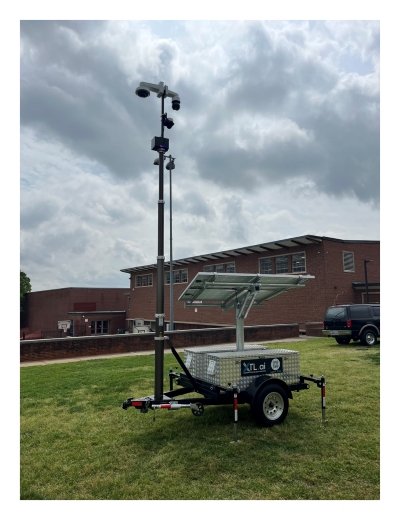
- Tactical Portability: Temporary Events & “Outside the Walls” Security: Stadiums, outdoor festivals, and temporary public venues face severe vulnerabilities in parking lots, tailgating zones, and pedestrian choke points. Legacy gunshot detection systems cannot protect these dynamic environments because they require weeks of trenching, permanent cabling, and complex multi-sensor calibration webs. Because edge processing enables single-sensor localization, modern ATD units can be integrated into mobile solar surveillance trailers. Security teams can deploy high-precision acoustic protection for a weekend stadium event, relocate the trailer to a construction zone on Monday, and maintain the exact same precision and VMS user interface without recalibrating a mesh web.
- Critical Infrastructure & Utility Grid Resilience: Energy substations and water utilities face increasing physical security mandates, such as NERC CIP-014, which require utilities to Deter, Detect, Delay, Assess, and Respond to physical attacks. High-powered rifle fire directed at electrical transformers often originates hundreds of yards outside the facility’s fence line. Edge sensors detect both the distant supersonic shockwave and muzzle blast, instantly slewing thermal or PTZ cameras to pinpoint the shooter’s position in dark tree lines or rights-of-way. Crucially for air-gapped utility networks, edge processing allows software to run entirely on-premises, satisfying strict cybersecurity policies that prohibit cloud connectivity.
- Educational Campuses & Commercial Properties: With over half of outdoor shooting incidents on commercial properties occurring in parking lots, educational campuses and facility managers face severe safety challenges in poorly monitored zones. Traditional video surveillance often struggles with visual blind spots created by parked vehicles, landscaping, or complex architectural layouts. Edge-based acoustic intelligence complements existing camera networks by detecting threats beyond direct line-of-sight. By delivering immediate visual confirmation directly to security dispatchers, the system provides the real-time situational awareness needed to evaluate the threat, guide emergency responders, and execute the most appropriate emergency response protocols.
Streamlined Perimeter Infrastructure and ROI
From an architectural standpoint, single-sensor edge localization eliminates the hidden costs and physical rigidity of legacy systems. Traditional mesh networks force organizations into construction-heavy projects. They rely on multiple sensors to cross-reference timestamps in the cloud just to isolate a single point, tripling hardware failure risks and inflating cabling costs.
Single-sensor edge localization treats security like a tactical deployment rather than a permanent construction project. It requires fewer cable runs, zero central server infrastructure, and open API integration with leading Video Management Systems (VMS). By combining minimal infrastructure overhead with mobile deployment flexibility and a verifiable evidence trail, modern acoustic intelligence gives security integrators and end-users a future-proof foundation. It bridges the gap between sound and sight, ensuring that whether mounted on a permanent perimeter fence or a temporary mobile trailer, security teams can act with absolute confidence.
By Mike ODea, Managing Director of ATD (Acoustic Threat Detection) at Acoem

When Your Power Fails, What Happens to Perimeter Security?

How to design resilient power that keeps critical perimeter security functions operating—even when backup power is limited
Which perimeter security functions must continue when primary power fails—and for how long?
That should be one of the first questions asked when designing a perimeter security system.
The answer is rarely “everything, indefinitely.”
Detection may need to continue. Critical cameras may need to remain available for assessment. Access control has to maintain the appropriate security and life-safety state, while communications keep the perimeter connected to those responsible for response. Some gates and entrances may need to remain operational while others can be closed.
How long those capabilities must survive can vary from minutes to days.
Yet resilient power is often approached from the opposite direction. A UPS is specified for the network equipment. Batteries are installed with access control. A generator supports the building. Solar and batteries power remote devices. The drawing shows multiple backup systems and therefore appears resilient.
It may not be.
The harder question is which dependencies those systems share—and what happens to the security mission when one of them fails.
Perimeter Security: Redundancy Isn’t Necessarily Resilience
Consider a critical facility with utility power, UPS systems and an emergency generator. Three sources of power sound reassuring. Now follow the electricity through the facility.
Perhaps the utility feed, UPS bypass and generator ultimately pass through common switchgear or a shared electrical distribution point. Perhaps the perimeter cameras and access-control system have dedicated battery backup, but the network equipment connecting them to the security operations center depends on another circuit. Perhaps two communications providers enter the property through the same conduit.
The components may be redundant, but their failure domains may not be. A failure domain is the set of systems that can be affected by the same point of failure.
This distinction is central to infrastructure resilience. CISA recommends identifying the services that backup systems rely on and determining whether redundant systems share common dependencies.
Those dependencies can extend well beyond the facility.
A generator depends on fuel. Fuel replenishment depends on suppliers and transportation. Communications facilities depend on electricity and may themselves depend on diesel deliveries during extended outages.
A security director cannot assess how resilient the perimeter really is simply by counting UPS systems, batteries and generators.
Trace the Perimeter Security Mission, Not Just the Backup Power
To understand whether backup power will actually sustain perimeter security, trace the security mission from detection through response:
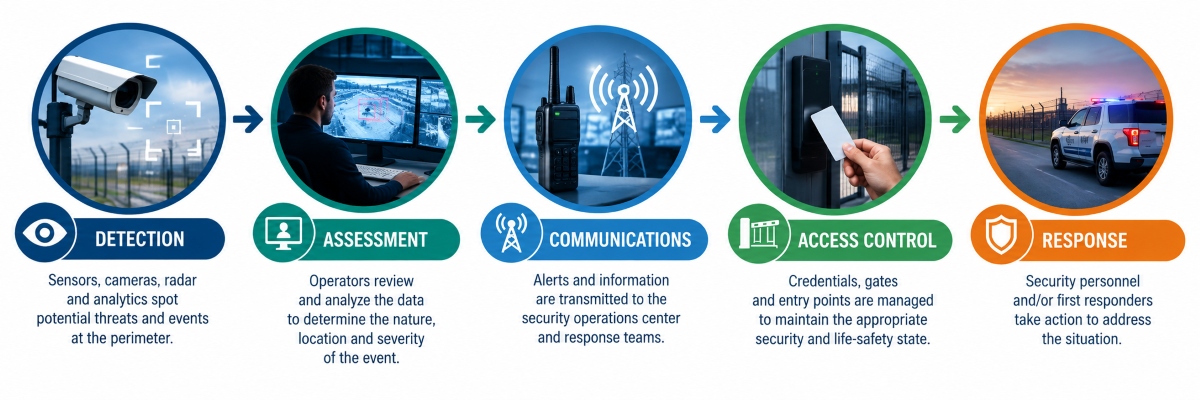
For each step, identify the power, network, communications and infrastructure dependencies required to keep it operating.
A camera can have power and still be operationally useless if its network path disappears. A gate can remain energized while the credential system it depends on becomes unavailable. An intrusion sensor can continue detecting while the communications system carrying its alarm to the SOC has failed.
The question is not merely, “What still has electricity?”
It is, “What security capability remains?”
What Does Perimeter Security Look Like at 40 Percent Power?
Once critical functions have been identified, another assumption deserves examination: that perimeter security must be either fully operational or unavailable.
There is a critical third condition: degraded operations. Suppose a facility can operate its complete perimeter security system for four hours on available backup power, but an event could disrupt utility service for 48 hours. One answer is to install enough generation and energy storage to operate everything for two days. Another is to determine what actually has to remain operating.
During normal conditions, a site might use hundreds of cameras, extensive perimeter and parking-lot lighting, multiple vehicle entrances, displays, analytics servers, intercoms and other systems.
During an extended outage, security priorities may change.
Outer-perimeter intrusion detection may remain essential. Selected thermal cameras may provide coverage that would otherwise require multiple conventional cameras and lighting. Critical entrances may remain electronically controlled while secondary gates are physically closed. Essential communications and network equipment may remain energized while lower-priority lighting, monitors, cameras and other loads are reduced.
The security system moves from normal operations to a predefined degraded security mode.
If conditions deteriorate further, an emergency security mode could preserve only those functions required to detect the highest-priority threats, maintain critical access control, and coordinate communications and response.
This is essentially security load shedding: reducing nonessential loads to preserve critical functions.
CISA includes load segmentation among its resilient-power practices because doing so can conserve fuel and extend the operating time of critical infrastructure.
For perimeter security, a resilience plan should define not only how much backup power is available, but which security capabilities receive it first. That decision is better made during system design than during hour 19 of a blackout.
When Power Generation Falls and Security Load Rises
Remote perimeter systems create another challenge.
Solar generation and battery storage have made it possible to place cameras, thermal imagers, radar, communications and other detection technologies where utility power would be prohibitively expensive or impossible to extend.
But a solar-powered perimeter node is only resilient if it can continue performing its security mission under the conditions most likely to compromise its power supply.
Consider winter operations in Alaska. Available sunlight can drop dramatically. Snow or ice can reduce solar collection. Cold temperatures can affect battery performance. At the same time, darkness may activate IR illumination. Low temperatures may activate camera or enclosure heaters. Communications still require power, while PTZ motors, radar, analytics and other functions may still be required.
Power generation can fall at the same time security power demand rises.
That is why average equipment consumption can be misleading.
Axis, for example, distinguishes between typical camera consumption and maximum consumption under worst-case conditions. Its maximum calculation can include heaters operating at full power, IR illumination at 100 percent, motors and fans running, recording and multiple video streams. In one documented outdoor PTZ example, cold nighttime operation with IR and heaters can draw multiples of the camera’s lower-power operating condition.
The lesson applies regardless of manufacturer.
A remote perimeter power system should be designed around the worst credible combination of available generation and required security load, not the average day.
The same principle applies in Arizona during extreme heat, along the Gulf Coast during a hurricane, or at a remote site experiencing days of heavy cloud cover.
Solar can be an excellent power source. But sunlight is not a backup plan.
For higher-resilience applications, CISA recommends combining intermittent renewable generation with energy storage and, where appropriate, another generation source.
The real design variable is autonomy: how long the security system can continue accomplishing its mission when its preferred source of energy is unavailable.
Are the Backup Sources Really Independent?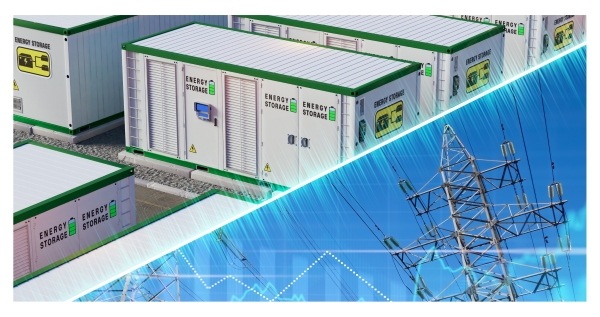
Every backup technology introduces a different strength—and another dependency.
A UPS or battery system provides immediate power when utility service disappears, but its runtime is limited by stored energy.
A diesel generator can provide extended running time, but eventually its limitation becomes fuel availability.
Natural-gas generation may reduce onsite fuel-storage requirements, but it introduces dependence on pipeline service.
Solar can reduce dependence on delivered fuel, but generation varies with environmental conditions.
Energy storage can bridge interruptions and extend autonomy, but eventually requires another energy source for recharging.
Microgrids can combine utility power, onsite generation, renewables and storage and manage them as a coordinated energy system.
The resilience question is therefore not simply, How many backup sources do we have?
It is: How independent are they?
A facility whose primary and backup systems share the same vulnerability may have redundancy on paper without meaningful resilience in operation.
The same thinking should extend to the security infrastructure itself.
Current security power systems increasingly support dual inputs, automatic transfer between independent AC sources, battery backup and network monitoring. That reflects an important change in security system design: power distribution is becoming an actively managed component of security infrastructure rather than a collection of power supplies hidden in equipment closets.
That visibility matters because the next power failure may not be a dramatic facility-wide blackout. It may be one failed circuit, battery, transfer device or remote power supply quietly taking a section of the perimeter.
Backup Power Has Become Something Security Can Monitor
Backup power has traditionally been inspected and periodically tested. Increasingly, it can also be monitored.
Networked power-management systems can provide information about AC status, voltage, battery condition and connected devices. Cameras themselves can increasingly expose power-consumption data. Remote solar installations can report charging performance and battery state.
That creates an opportunity to treat power conditions as security information.
A deteriorating battery is no longer something that needs to be discovered during the next preventive-maintenance visit. An unexpected rise in equipment consumption can be investigated. Failure of a remote power supply can generate an alert before operators discover that a device is unavailable.
The same visibility can support degraded operations.
If operators can see remaining battery capacity, generator status and equipment loads, they can make better-informed decisions about when to shed lower-priority security functions.
That connectivity also introduces a cybersecurity consideration: network-connected power-management equipment becomes part of the cyber-physical security environment. Remote administration, authentication, network segmentation, software maintenance and access control become relevant to infrastructure that previously might have been considered purely electrical.
The power system keeping security online must itself be protected.
Resilience Extends Beyond the Technology
Eventually, a prolonged power failure can exceed the capability of the backup systems designed to support it.
At that point, resilient perimeter security becomes as much an emergency-management issue as an electrical one.
That means identifying and planning for external dependencies before an outage occurs.
Does the electric utility understand the facility’s criticality and the consequences of an extended outage? Are the appropriate utility contacts established? Does the organization’s emergency plan coordinate security with local emergency management and first responders? Can fuel suppliers reach the site during a regional emergency? Can the security integrator provide emergency support?
And if cameras, electronic access control or intrusion detection cannot be sustained, can people temporarily perform some of those functions?
A contract guard service might establish temporary posts or increase patrols. An automated gate might move to controlled manual operation. Loss of electronic detection could trigger additional physical patrols. Communications could shift to an alternate channel.
People and procedures can temporarily replace some technology.
But those alternatives require staffing, equipment, authority and coordination. They are difficult to arrange after a widespread emergency has already begun—particularly when other organizations are competing for the same guards, technicians, fuel and emergency resources.
The resilience plan should therefore identify not only which technologies may fail as an outage continues, but who becomes involved when they do.
Power providers, emergency services, security contractors, fuel suppliers, communications providers, integrators and internal operations teams can all become part of the perimeter security continuity plan.
The longer the outage lasts, the more important those relationships become.
The Generator Started. Did Security Survive?
Testing the backup-power equipment is not the same as testing whether perimeter security can sustain an outage.
A generator may start and transfer power exactly as designed while a network switch reboots, cameras temporarily disconnect, analytics stop processing or communications fail. Electrically, the test passed. From a security standpoint, it may have failed.
The better test is to remove primary power and verify that the required security functions continue operating. Then extend the outage long enough to test the resilience plan itself.
At four, 12 or 24 hours, the question changes from whether backup power works to how long the organization can sustain the security mission: Which loads remain essential? What can be shed? Which technology functions now require people or alternative procedures? Which outside partners need to be engaged?
Test the perimeter and its continuity plan, not simply the generator.
Design Perimeter Security for Power Failure
Power failures rarely arrive under ideal conditions.
They can accompany hurricanes, ice storms, floods, wildfires, extreme temperatures, grid emergencies and other events that simultaneously increase security requirements, reduce staffing, interrupt communications and make outside assistance harder to obtain.
Those are precisely the circumstances under which perimeter security may matter most.
Designing resilient power should not begin with the generator, battery or solar array. It should begin with the mission, which is:
Which perimeter security functions must continue when primary power fails—and for how long?
Identify those functions. Trace every dependency supporting them. Find the shared failure points. Determine the minimum security capability the organization must maintain. Design backup power sources for the worst credible operating conditions. Monitor their health. Establish the people, procedures and outside relationships needed when technology begins to degrade.
And then test the system by failing it.
A resilient perimeter is not one with the most backup power.
It is one that can lose primary power, transition deliberately into degraded operations and still provide the detection, communications, access control and response capabilities required to protect the organization.
GSX 2026 Highlights: The Perimeter Knows No Bounds

We connected with companies across a broad range of solutions and discovered where humans meet AI, how the perimeter has no definitive coordinates, and how downtime in critical infrastructure is driving demand.
If there was one thing that stood out at GSX 2026, it was the sheer breadth of what now falls under the perimeter security umbrella.
Across several busy days on the show floor, conversations moved from artificial intelligence (AI) and video analytics to radar, drones, acoustic detection, remote guarding, access control and mobile surveillance. Some technologies were designed to detect a threat miles away. Others were focused on turning massive amounts of data into something a security operator can actually use.
The variety was visible across the show floor, too—from mobile, solar-powered security solutions and autonomous drones to portable access control, new wireless devices and technologies designed to make sense of increasingly complex physical environments.
Despite the differences, several themes surfaced repeatedly: AI is increasingly being used to enhance human decision-making rather than replace it; the traditional definition of a perimeter is rapidly disappearing; and for critical infrastructure and other high-value operations like nuclear where downtime can cost a quarter to a million per day, waiting for something to happen can dwarf the cost of prevention.
How AI and Human Security Teams Are Working Together
For all the discussion surrounding artificial intelligence, one of the most interesting themes at GSX was decidedly human.
Ryan Smith, President of Titan Protection, described the evolution of his company from traditional guarding into camera monitoring, mobile surveillance and drones. Today, Titan uses technologies including radar to establish virtual perimeters, with drones or security officers dispatched to investigate detected activity.
But Smith doesn’t view that progression as technology replacing people.
“We’re not at the point where it’s one or the other,” he said.
Instead, technology can perform much of the heavy lifting involved in detection, filtering and identifying potential events, while humans remain responsible for what people do particularly well: judgment, communication, creativity and evaluating a response based on what the technology is telling them.
That combination becomes increasingly important as organizations attempt to secure large outdoor environments where traditional infrastructure isn’t always practical. Titan works in environments including construction sites, data centers and auto dealerships, where getting power or connectivity to the ideal detection point can itself be a challenge. Solar-powered systems provide another option for extending protection into those locations.
And the calculation isn’t simply about the cost of security equipment. Smith noted that organizations sometimes focus on the immediate cost of repairing damage without considering the far larger consequence of extended operational downtime.
“The cost of doing nothing is pretty high,” Smith added.
That human-technology balance also surfaced in our conversation with Brent Gable, VP, Business Development at OpenEye, around the growing role of remote video monitoring. Gable described using analytics and automation to filter activity before it reaches a central station operator, helping reduce false positives while allowing operators to focus their attention on events that require human judgment.
“It goes way beyond basic video verification,” Gable said.
Moving Security From Detection to Action
Of course, detecting an event is only valuable if the information gets to someone who can do something about it.
That was a recurring theme in our conversation with CHeKT founder Wes Usie, whose perspective came from decades running a Security Operations Center (SOC). Usie watched video, analytics and other security technologies rapidly advance, but saw a disconnect: many weren’t designed around the established workflows and automation platforms monitoring centers rely on to receive and act on information.
That challenge eventually led him to found CHeKT, which was designed to bring functional technologies into existing alarm automation and monitoring workflows.
Usie’s own path to CHeKT added another dimension to the conversation. After spending his career in the alarm industry and starting his first company at 24, he was 48 when he decided to pursue the idea that became CHeKT—determined to build a solution that could integrate seamlessly with the way monitoring centers already operated.
His perspective on AI was equally pragmatic. In an industry where incorrect information can have real-world consequences, Usie stressed the importance of understanding AI’s limitations rather than simply attaching AI to every new security solution.
That may ultimately be one of the larger questions facing the industry: not simply what can AI detect, but how does that intelligence become reliable, actionable information for the people responsible for security?
Inovonics provided a practical example of that shift from detection to action. Its new duress card can add location information and integrate with other security systems through APIs. In one deployment discussed at GSX, a duress alert can identify where a person is located and direct a nearby camera toward the event—giving responders more context than a traditional panic signal alone.
As one Inovonics representative put it, getting the signal through is only part of the equation; the real opportunity is “what you do with that information.”
That enthusiasm for what technology can do was evident throughout the show. Mercury Security’s Damon Dageenakis, Sr. Director of Product Management, even pulled a Series 4 expansion board from his jacket pocket as he explained how the modular design can extend the capabilities of Mercury’s access control hardware. It was a memorable example of the deep product knowledge and genuine enthusiasm we encountered at GSX.
Why the Modern Security Perimeter Has No Fixed Boundary
“The perimeter moves.”
That observation from Andrew Elvish, VP, Global Marketing at Genetec, captured one of the clearest themes to emerge from GSX: the perimeter is becoming increasingly difficult to define by a fence line, property boundary, or even a fixed location.
Elvish described organizations looking beyond their physical facilities for intelligence about threats and disruptions that could affect their operations. For pharmaceutical and life sciences companies dependent on cold-chain logistics, for example, a weather event, road closure or airport disruption miles away can matter long before anything reaches the facility itself. The same applies to an executive traveling away from the corporate campus—the person moves, and in a sense, the perimeter moves with them.
Across the show floor, other technologies demonstrated that expanding perimeter in more physical ways. Asylon’s autonomous drones extend visibility into the air and across large properties, while Titan Protection uses radar to establish virtual boundaries in outdoor environments. Mobile, self-contained systems such as ENS Security’s full-height solar security trailer showed how detection can also be deployed where permanent infrastructure isn’t practical (and garnered a bit of interest from attendees).
That expanding perimeter was visible in other forms as well. Echodyne’s radar technology illustrated how detection can extend beyond what a camera or physical barrier can see, while Doorking represented the other end of the equation: controlling the physical points where people and vehicles ultimately enter a protected environment.
The concept takes on another dimension across extremely large environments. Our conversation with Ryan Schroeder, Senior Director at Motorola Solutions’ video security business, explored the company’s Silent Sentinel long-range cameras, designed for demanding applications such as border, maritime and critical infrastructure security. The ruggedized, multi-sensor cameras combine thermal imaging with high-resolution visible zoom and target tracking, with the ability to detect human and vehicle threats at distances of up to 20 miles—even in darkness.
“When you’re talking about a perimeter that can extend for miles, there isn’t a one-size-fits-all solution,” Schroeder said. “You have to look at the terrain, the distances involved, what you need to detect and where you need visibility, and then build the camera solution around those requirements.”
That ability to customize the technology also makes it relevant beyond miles-long perimeters. The same approach can extend visibility across smaller environments where organizations need to see and understand what is happening well beyond a conventional fence line or property boundary.
Even understanding where something is happening is becoming part of that broader picture. Mappedin’s digital mapping technology demonstrated how physical spaces can be represented and navigated digitally, providing additional context around the people, assets and events within an environment.
Taken together, these approaches challenge the traditional idea that perimeter security begins at Point A and ends at Point B. The perimeter can be physical or virtual, fixed or mobile, on the ground or in the air—and relevant intelligence may originate miles beyond it.
The perimeter may still have coordinates on a map. Increasingly, the intelligence required to protect it does not.
Why Acoustic Intelligence Adds Another Layer to Perimeter Security
GSX also reinforced that situational awareness doesn’t have to begin with something a camera can see.
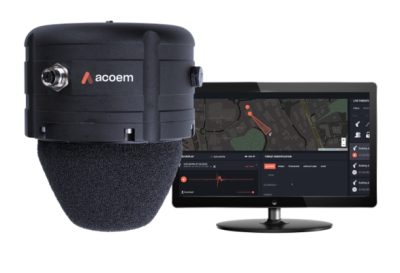 Mike ODea, Managing Director at Acoem, discussed acoustic intelligence as an additional sensor layer for perimeter security. Cameras remain enormously important, but sound can provide another source of information—particularly across large or remote environments.
ODea pointed to potential acoustic signatures ranging from gunshots and explosions to vehicle crashes and other anomalies. AI can then be trained around the particular environment and the sounds that matter within it.
Acoustic detection can also help direct visual systems toward an event rather than requiring an operator to determine which camera should be viewed first.
“Sound is agnostic. What makes it valuable at the perimeter is determining whether that sound is harmless—or the first indication that something is wrong,” ODea added.
Sound played a broader role across the show floor as well. Zenitel’s communications technologies offered another reminder that audio isn’t simply another source of intelligence—it can also play a role in how security teams understand an event and communicate through the response.
It was another reminder that the future of perimeter security may be less about finding the single best sensor and more about combining different types of intelligence to create a more complete picture.
What GSX 2026 Revealed About the Future of Perimeter Security
After several days of conversations across the GSX show floor, perhaps the biggest takeaway wasn’t any single technology. It was how rarely the most interesting discussions stayed confined to one.
A radar detection could trigger a drone. An acoustic event could direct a camera. A duress signal could identify not only that someone needs help, but where that person is located and potentially give responders visual information about what is happening. Intelligence originating miles away could alert an organization to a disruption before it ever reaches the physical perimeter.
That convergence changes the question security teams are asking. It’s no longer simply, “Did something cross the perimeter?” It’s: “What is happening, where is it happening, what else do we know—and what should happen next?”
Other solutions demonstrated how physical security continues to adapt to increasingly complex perimeter environments. Some addressed the challenge of bringing protection to places where traditional infrastructure isn’t practical: Boon Edam’s portable, forklift-ready full-height turnstile brings controlled access where it’s needed, while mobile solar surveillance can extend security into areas without readily available power.
Elsewhere on the show floor, Magnasphere’s detection technology and CEIA’s security screening solutions reinforced the continued importance of physical detection and screening. Individually, those may look like very different solutions. Viewed across dozens of conversations, however, a larger picture emerged.
The perimeter is becoming less of a boundary and more of an intelligence environment.
That environment can include a fence or gate, but it can also include radar establishing a virtual boundary, a drone investigating an alert, sound identifying an event, location data pinpointing where help is needed, external intelligence warning of a disruption or AI helping operators make sense of all of it.
And despite the amount of technology on display at GSX, the endpoint remained remarkably human. Again and again, the most compelling conversations came back to giving people better information sooner—so they can understand what is happening and decide what to do about it.
Maybe that’s the real shift in perimeter security. The goal isn’t simply to build a stronger line around what needs to be protected. It’s to know more about what’s happening around it—earlier, farther away and with enough context to act.
By Heather Martin, smartPerimeter.ai Editorial Consultant
Rethinking Recruitment and Retention for the Event-Day Workforce
New IIFX research examines what sports and entertainment workers value—and where training, stability and career development fall short
Sports and entertainment venues depend on frontline employees to deliver safety, security and service—but what keeps those workers engaged and on the job?
New IIFX research offers some revealing answers. While 92.9% of surveyed workers reported high overall job satisfaction, 47% described the work as precarious or unstable, only 42% reported adequate role-specific training, and just 31% saw a clear career progression path.
The new white paper, Building a Sports & Entertainment Industry Workforce Advantage, explores what those findings mean for recruitment, retention, training and workforce development—and offers practical strategies for building a more capable and sustainable event-day workforce.
Get the full report now.
Is Your Smartphone Really Your Next Access Credential?

The pros and cons of mobile credentials—and why their future may ultimately be less about the device and more about identity.
For decades, physical access control was relatively simple. You had a key. Then came the badge, followed by proximity credentials, smart cards, biometrics and increasingly sophisticated access control systems.
Now, the next access credential is already in your pocket—the smartphone.
The idea isn’t new—but the scale, maturity and direction of the technology are. The bigger question isn’t whether the physical ID badge is dead. It’s whether the smartphone is simply replacing the badge—or moving us toward something bigger: identity-based access.
The Pros: Why Mobile Credentials Are Gaining Momentum
Mobile credentials offer some obvious advantages—but they also introduce new questions around security, infrastructure and interoperability. Let’s start with what they get right.
#1. It’s Already in Your Pocket
The most obvious advantage is simple: people know where their phones are—period. No arguments! They take them everywhere: meetings, airports, restaurants, hotels, bedrooms, bathrooms… you get the idea.
Instead of relying on a badge, access card or key fob that can be forgotten, lost, stolen or shared, organizations can use something employees already consider essential. One less credential to remember because it’s already in your pocket.
#2. Physical Credentials Cost Time and Money
Managing the lifecycle of physical credentials is a full-time job. Someone has to issue, distribute, activate, replace, deactivate and recycle all those cards. Mobile credentials can turn much of that process into a digital workflow.
Organizations can onboard, manage and revoke credentials without physically producing or distributing another card—a particular advantage for large, distributed or frequently changing workforces. The credential begins to look less like a piece of plastic and more like an Environmental, Social and Governance (ESG) approved service—all managed through software.
#3. Your Phone Can Provide Multiple Authentication Signals
A smartphone isn’t simply a credential. It can become a platform for answering three important questions: Is this the authorized device? Is it being used by the authorized person? And are they accessing it under authorized circumstances?
Those answers can come from multiple signals:
- Something you have (mobile device)
- Something you know (PIN/password)
- Something you are (face or voice)
- Something the access control system knows about you
- Passive signals, such as where you are in the building (location) and when you are entering the perimeter (timestamp)
Compare that with a traditional physical card. Once issued, it can essentially be used by anyone who holds it up to a reader—no additional questions or signals required. Not very secure, BUT still the norm for most businesses today.
#4. Mobile Credentials Converge Physical and Digital Access
Today, organizations manage two disparate worlds:
The digital world—providing access to apps, networks, laptops, cloud services and data.
The physical world—providing access to doors, elevators, parking, gates and restricted areas.
In both worlds, the identity of the person is the same. Why identify the same person twice when you could converge physical and digital identity access management? The smartphone could become “the great unifier”—bringing us closer to the seamless, touchless, frictionless world promised by The Jetsons!
HID’s 2026 research found that 75% of organizations have deployed or are actively evaluating unified physical and digital identity solutions.
#5. Open Standards Streamline Mobile Access
One of the biggest obstacles to mobile credentials has been industry fragmentation: different manufacturers, readers, apps and credential platforms. Open standards are beginning to address that problem.
The Connectivity Standards Alliance released Aliro 1.0 in February 2026. Supported by companies including Apple, Google and Amazon, Aliro provides an interoperable framework for smartphones, wearables, locks and readers using technologies including NFC, Bluetooth Low Energy (BLE) and Ultra-Wideband.
The Physical Security Interoperability Alliance (PSIA) offers another approach with Public Key Open Credential (PKOC), supported by physical security companies including JCI, Honeywell and Kastle Systems. PKOC uses public key cryptography and is designed to work across physical cards, mobile devices and other secure hardware.
Both approaches aim to make the credential experience less dependent on proprietary systems. If successful, they could help turn the mobile phone into a universal access wallet for both your digital and physical life.
The Cons: What Could Go Wrong?
Mobile credentials aren’t magic. Moving the credential from a card to your phone solves some problems but it creates others. So, what happens when convenience collides with the realities of technology?
#1. What Happens When Your Mobile Device Doesn’t Work?
We all experience a bad tech day now and then. And any tech company that says its solution is 100% rock solid probably also has some cheap real estate in the Everglades to sell you.
So, what happens when your mobile phone is:
- Dead
- Lost
- Stolen
- Broken
- Replaced
- Locked
- Incompatible with your app
- Unable to communicate with the reader?
The industry is developing ways to keep mobile credentials functioning under certain offline or low-power conditions, but organizations still need a reliable backup plan.
#2. Mobile Doesn’t Mean Secure
One of the easiest mistakes to make is assuming that because a credential is on a smartphone, the entire access control system is automatically more secure. It isn’t.
Security depends on the architecture it “sits on.” The phone (Android or iOS), credential (PKOC or Aliro), reader (NFC or BLE), communication protocol (Wiegand or OSDP), controller, access control software and identity system (federated or decentralized) are all important pieces of the puzzle. Even a sophisticated credential connected to outdated infrastructure can create a weakness.
As our industry moves toward technologies such as Aliro and PKOC, however, card + reader decisions may become less complicated. As Jon Polly, Chief Solutions Officer at ProTecht Solutions Partners, points out: “Aliro changes this tremendously. The credential does not need to consider the reader as long as the underlying technology (i.e., Aliro) is enabled. The differentiator for credentials will be credential governance.”
#3. The “One App” Problem
The smartphone was supposed to streamline convenience. But without interoperability, we may simply be creating a keychain of apps—one for the office, apartment, gym, parking garage, hotel, even the toaster and refrigerator! Look at the number of apps on your phone today. I know, it’s silly.
But interoperability doesn’t eliminate every proprietary element. As Polly points out, “Aliro addresses important communication and interoperability issues but credential governance and the credential provider relationship remain important considerations.” That includes how company and employee data is retained, stored and—hopefully—deleted.
#4. Your Legacy Infrastructure Isn’t Going to Disappear
Replacing a physical badge with a mobile device doesn’t mean replacing your entire access control system. Companies will still need to service, update and manage legacy readers and panels, existing credentials, older locks, Wiegand-to-OSDP transitions and security policies.
That’s why mobile adoption isn’t simply a technology decision—it’s an infrastructure decision. And for many organizations, that means migration rather than rip and replace.
#5. Convenience Can Create New Expectations
Consumers have become accustomed to immediate digital experiences. Tap. Open. Go! That’s what the customer wants.
But sometimes physical security needs a little friction. A hospital, airport, critical infrastructure facility or secure corporate environment has different compliance and security requirements than a residential apartment building. Convenience cannot be the only design objective.
This is where identity becomes more important than the device carrying the credential—and where proven biometric liveness detection MATTERS. Before someone enters your perimeter or logs into your network, you need TRUST that the carbon-based life form (a person!) holding that device is who they say they are.
Don’t believe authenticating the person holding the device is critical? Watch this Wall Street Journal video on how thieves can get into your phone through human error. WARNING: This video may keep you up at night.
So, Is Your Phone Really the Credential?
It is happening slowly (like everything in the physical security market), but I think there’s a more interesting way to look at it.
The phone may simply be the container for your credential. Your biometric helps establish that you are the person holding that specific device, while your digital identity establishes who you are and what you can access. The access control system then makes the final decision: IN or NOT.
This is what I call the AID2entry evolution—moving us from credential-based access to identity-based access. And that’s where I see mobile credentials becoming very interesting. Your next credential may not be a credential at all. The smartphone may be the most convenient way to carry it, but the phone isn’t your identity.
The phone may be the key, but ultimately, you are the credential.
By Doug OGorden
ISC East 2026: 25 Perimeter Security Exhibitors to Put on Your Show Floor Route

ISC East returns to New York City Nov. 3-5, bringing security manufacturers, integrators and practitioners to the Javits Center for three days of education, networking and perimeter safety and security technology.
For perimeter security professionals, the show floor offers solutions spanning physical barriers and fencing to radar, intrusion detection, video surveillance, access control and emerging IoT technologies.
Here are 25 perimeter-focused security exhibitors to put on your ISC East 2026 perimeter route. We’ve organized this preview by booth location to make it easier to walk the show.
4TFY INC — Booth 204
4TFY focuses on perimeter intrusion detection with its V-Alert fence and wall disturbance sensor. The technology can be deployed on chain-link and decorative fencing, brick and concrete walls and underground barriers, with individual sensors providing pinpoint alarm detection.
Gallagher — Booth 211
Gallagher brings access control and perimeter security together for applications ranging from commercial facilities to critical infrastructure. Its perimeter portfolio includes monitored pulse fencing and integrations designed to connect perimeter alarms with broader site security operations.
Rutkoski Fencing — Booth 215
Rutkoski Fencing specializes in high-security fencing, gates and access-control installations. Its capabilities include anti-climb and anti-dig fencing, precast concrete walls and anti-crash systems for utilities, data centers, government and industrial facilities.
Action-CS — Booth 231
Action-CS provides surveillance and security technology for applications requiring detection and situational awareness. Perimeter professionals can explore how its technology fits into layered surveillance and monitoring environments.
Hirsch — Booth 312
Hirsch brings physical access-control technology to ISC East, providing another stop for attendees looking at how credentialing, controllers and access management connect the perimeter with the rest of a facility’s security infrastructure.
Echodyne — Booth 318
Echodyne extends perimeter awareness into the ground and air domains with its MESA radar technology. EchoGuard provides short-range surveillance while EchoShield addresses medium-range detection, with AI/ML classification helping distinguish and track potential threats, including drones.
Ameristar Perimeter Security — Booth 406
Ameristar provides high-security fencing, gates and vehicle-barrier solutions designed to harden facility boundaries and control access to protected sites. The ASSA ABLOY company serves critical infrastructure, government and other high-security applications.
Mul-T-Lock USA — Booth 502
Mul-T-Lock brings locking and access-control technologies to the show floor. Its electronic locking, credential and controlled-entry solutions can help secure gates, doors and other access points where the perimeter transitions into protected spaces.
Rhombus — Booth 513
Rhombus brings cloud-managed physical security into the perimeter conversation through connected video surveillance, sensors and access control. Its platform gives security teams a centralized environment for monitoring and responding to activity across distributed facilities.
OPTEX Inc. — Booth 524
OPTEX specializes in outdoor intrusion detection, including sensors and REDSCAN LiDAR technology designed to detect activity around buildings, fences and open areas while providing actionable information about where an intrusion is occurring.
Magnasphere Corporation — Booth 530
Magnasphere specializes in security sensors built around its magnetic switch technology rather than conventional reed switches. Its lineup includes door- and gate-position sensors for intrusion detection and access-control applications.
Sielox — Booth 531
Sielox will showcase its new AnyWare edge on-premises access-control platform alongside enhancements to Pinnacle. AnyWare edge is designed for smaller two- to eight-door deployments, while Pinnacle supports larger enterprise environments.
Millennium Group Inc. — Booth 547
Millennium offers access-control and security-management technology for organizations managing multiple doors, facilities and users. Its solutions provide another look at how electronic access control can manage movement from the public perimeter into secured spaces.
Allegion — Booth 601
Allegion’s family of brands spans locks, door hardware, credentials and electronic access solutions. Its technologies address controlled entry across commercial, institutional, multifamily and other environments.
Digital Watchdog — Booth 701
Digital Watchdog brings video surveillance, analytics and video-management technology to ISC East. For perimeter applications, its technologies can extend surveillance across outdoor areas while connecting cameras and events to centralized security operations.
Perimeter Security Partners — Booth 837
Perimeter Security Partners designs and installs crash-rated bollards, wedge barriers, crash beams, swing gates and other vehicle-control solutions. The company also provides integrated access-control-point infrastructure for high-security environments.
Automatic Systems America — Booth 918
Automatic Systems addresses pedestrian and vehicle access with turnstiles, speed gates and perimeter gates. Its portfolio provides options for controlling and monitoring movement through both vehicle and pedestrian entrances.
Senstar Inc. — Booth 930
Senstar recently launched its FiberPatrol FP1500 precision-locating fiber-optic sensor for fence- and wall-mounted perimeter protection. The system can locate intrusion attempts to within ±3 meters and targets high-consequence sites including data centers, utilities, substations and correctional facilities.
Genetec Inc. — Booth 1003
Genetec’s Security Center platform brings video, access control and other security technologies into a unified environment. Its open architecture is particularly relevant as perimeter deployments increasingly integrate multiple detection, surveillance and response systems.
Farpointe Data Inc. — Booth 1018
Farpointe Data focuses on RFID readers and credentials for electronic access control. Its portfolio includes mobile credentials and longer-range credential-reading technology applicable to gates, parking facilities and other perimeter entry points.
Observation Without Limits (OWL) — Booth 1040
OWL’s GroundAware radar provides wide-area perimeter intrusion detection for critical infrastructure and other exposed sites. Its upgraded GA1360LH 360-degree radar is designed to detect, track and classify people, animals and vehicles at ranges exceeding one kilometer.
Doorking — Booth 1107
Doorking provides vehicle-gate operators, telephone entry, access control and parking-control systems. Its technologies address one of the perimeter’s most important areas: controlling and managing vehicle and pedestrian entry.
LEAF Community — Booth 1124
LEAF Community brings an industry collaboration and networking component to the ISC East floor, providing security professionals with another avenue for connecting and sharing information alongside the technologies on display.
Secure Passage — Booth 1130
Secure Passage focuses on security and access technologies that help organizations manage movement into protected environments, adding another access-control stop for attendees examining how people are authenticated and admitted through secured entry points.
ReadFind IoT — Booth 1131
ReadFind IoT specializes in RFID tags and RFID-enabled sensing and identification technology. Its products include mini RFID tags, NFC wearables, sensor tags and customized RFID solutions for identification, tracking and connected applications.
Building a Layered Perimeter at ISC East
These exhibitors illustrate how broad the modern perimeter has become. Fences, gates and vehicle barriers still form the physical boundary, but radar, LiDAR, video analytics, intrusion sensors, mobile credentials, access control and integrated security platforms increasingly determine how quickly organizations can identify and respond to activity at that boundary.
ISC East 2026 runs Nov. 3-5 at the Javits Center in New York City, with the exhibit hall open Nov. 4-5.
Explore exhibitors, education and more here.
NEWS FROM THE EDGE
XTRACT ONE TECHNOLOGIES
Xtract One Technologies introduced Mean Time to Secure (MTTS), a new metric designed to provide a more complete measure of security screening performance. MTTS combines Mean Time to Detect during primary screening with Mean Time to Resolve during secondary screening, helping security teams identify bottlenecks and evaluate both screening efficiency and effectiveness. The capability is available across Xtract One’s SmartGateway, Xtract One Gateway and Xtract One View platforms. Read the full announcement.
ALTRONIX
Altronix showcased new power, networking and infrastructure solutions at GSX 2026, including its eFlow Pro Series universal power supply/charger and ReServ24B automatic transfer switch with rapid battery charging. The company also highlighted its Trove access and power integration, NetWay Spectrum hardened PoE and Pace long-range Ethernet solutions, along with LINQ network power management integrated with Milestone XProtect. Read the full release.
WILLIAM “BILL” EDWARDS, CPP, PSP, PCI, CCUSP
Director of C-UAS Operations, ENSCO | Honorary Regimental Commander, 68th Armored Regiment
William “Bill” Edwards has released The Perimeter Has Changed: Building and Leading the 3D Physical Security™ Enterprise, a new handbook for security leaders addressing interconnected ground, cyber and low-altitude aerial threats. The book introduces a 3D Physical Security approach built around the Decision Perimeter and Decision Advantage, providing a framework to improve situational understanding, decision-making and response across organizational boundaries. Find the book here.
OPENEYE
OpenEye introduced AI Visual Search and AI Visual Check for OpenEye Web Services (OWS), adding natural-language search and automated visual monitoring. AI Visual Search helps users quickly locate relevant footage across cameras, while AI Visual Check monitors operations, safety and compliance across multiple locations and alerts users to issues such as blocked fire exits, out-of-stock shelves or unattended security posts. Read the full release.
MILESTONE
Milestone Systems previewed the next generation of its BriefCam analytics platform at GSX 2026. Designed for the Generative AI era, the platform adds natural-language video search, customizable detection models and real-time alerts to help security teams accelerate investigations and identify interactions between people and objects. Milestone also showcased updates across its XProtect VMS and Arcules cloud VSaaS platforms.
The company also announced that Columbia Borough, Pa., is using Milestone XProtect to support a community-wide video security network spanning public buildings, parks and downtown areas. The system has grown to approximately 83 camera feeds over more than 16 years.
AMBIENT.AI
Ambient.ai released a new white paper, “Detection Is Not Prevention,” examining how security teams can move from identifying threats to preventing incidents through AI-driven behavioral detection, human verification and automated response. The paper explores detecting pre-incident behaviors across more than 150 threat signatures and using human review for the highest-severity events while automating routine detections. Read the white paper.
INOVONICS
Inovonics showcased its expanded portfolio of wireless security solutions at GSX 2026, including its new Duress Card and upcoming Intrusion Detection System. The Duress Card supports three alarm conditions from a single device and can provide location and real-time tracking, while the wireless-first intrusion system supports up to 256 zones and combines EchoStream wireless with cellular, Ethernet and Wi-Fi communications. Read the full release.
VIEWSCAN
ViewScan released an enhanced version of ViewScan Protect, adding expanded analytics, faster response times and earlier intervention capabilities to its AI-powered monitoring platform. The system combines video and environmental sensor monitoring with AI detection, human verification, live audio deterrence and escalation. ViewScan also launched a redesigned website featuring new AI event videos, case studies, white papers and other resources.
ANTAIRA TECHNOLOGIES
Antaira Technologies is addressing the growing mobile surveillance market with industrial PoE networking solutions designed for solar-powered security trailers. Its LMP-1204G-SFP-bt-24-T managed switch operates directly from 24VDC power and delivers up to 100W per port, while the compact LMP-C602G-SFP-bt-T-V2 supports space-constrained installations. Both are designed to provide reliable connectivity for cameras and other security devices in harsh, remote environments.
PRODUCT / COMPANY SHOWCASE

ReServ24B
Altronix ReServ24B is an automatic transfer switch with built-in rapid charging for SLA or LiFePO4 backup batteries. It is designed for critical applications where constant power is critical or where faster, longer battery charging is required.
ReServ24B supports two 24VDC power supplies and automatically transfers from the primary power input to the secondary without delay, helping maintain system operation during a power interruption. When primary power is restored, it is routed back to the device's first power input, while excess power is used to rapidly recharge the backup batteries, helping maximize battery availability.
ReServ24B features LINQ™ Network Management Interface for remote monitoring, control, and reporting via the LINQ2 module, providing users with visibility into power status and system diagnostics. Designed for security professionals and system integrators, ReServ24B provides power redundancy and battery management for critical 24VDC security applications requiring continuous operation and remote power management.
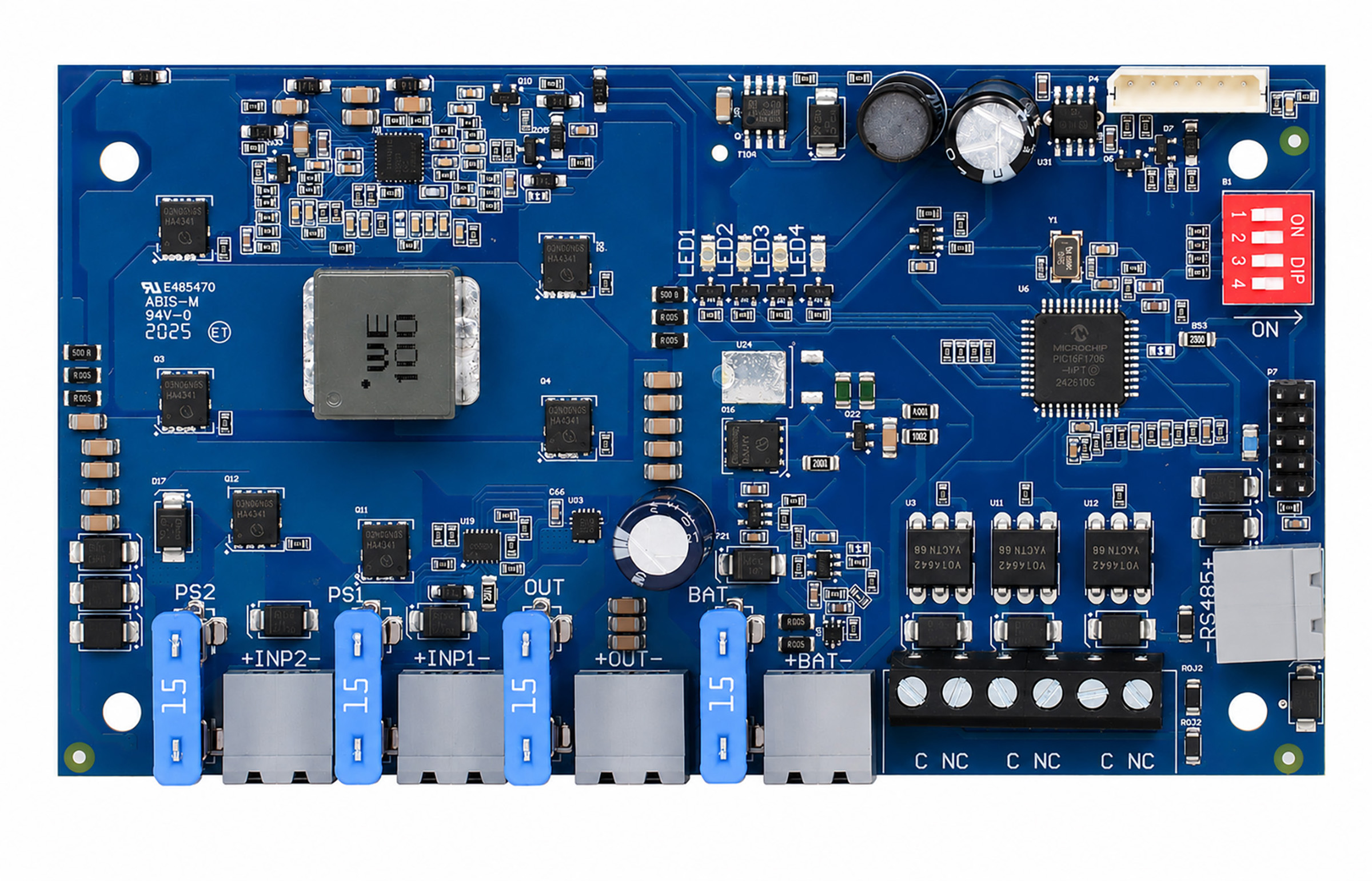

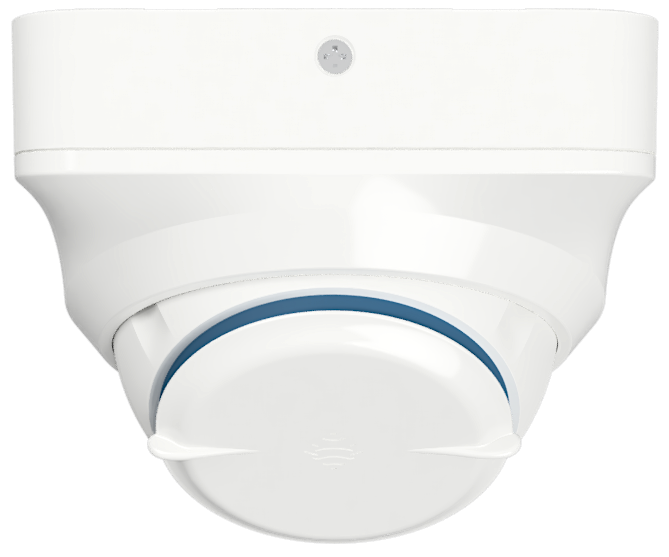



SDC’s Auto Entry Control low-energy swing door operators are designed for applications requiring ADA compliance or user convenience.
SDC’s operator is built with a state-of-the-art microprocessor-based unit that is self-tuning and self-learning while offering non-handed operation, full-mechanical stops, and a variety of interface options for sensors, push-plates, fire alarms and electrified locks.
It’s belt driven with a combination of gears and pulleys which requires less torque, less power, absorbs more abuse, and is quieter than other automatic door openers.